
 English US
 English UK
 English AU
 English SG
 Français
 Deutsch
 Italiano
 Español
 Nederlands
E-Invoicing in France
Starting September 2026, all VAT-liable businesses established in France must be able to receive electronic invoices, while issuance obligations will be introduced progressively based on company size. Large and mid-sized companies will begin issuing e-invoicing in France in September 2026, while SMEs and micro-enterprises will follow in September 2027.
*This page is intended as a practical overview only. Requirements, rules, timelines and technical specifications may change as the regulation evolves.



France B2B e-invoicing requirements at a glance
From e-invoicing model selection to rollout timing, these are the key factors businesses should consider when preparing for France's mandatory e-invoicing obligations.
Current status — The legal framework has been approved
Scope — Domestic B2B transactions
The reform covers domestic B2B invoice exchanges. B2C and cross-border transactions are subject to e-reporting requirements.
Format — Factur-X, CII, and UBL formats
Three formats are accepted: Factur-X (hybrid PDF/XML), UBL 2.1 (XML), and CEFACT CII (XML).
Archiving — 10 years
The invoice archiving period is 10 years from invoice date.
Transmission method — Certified platforms (PA)*
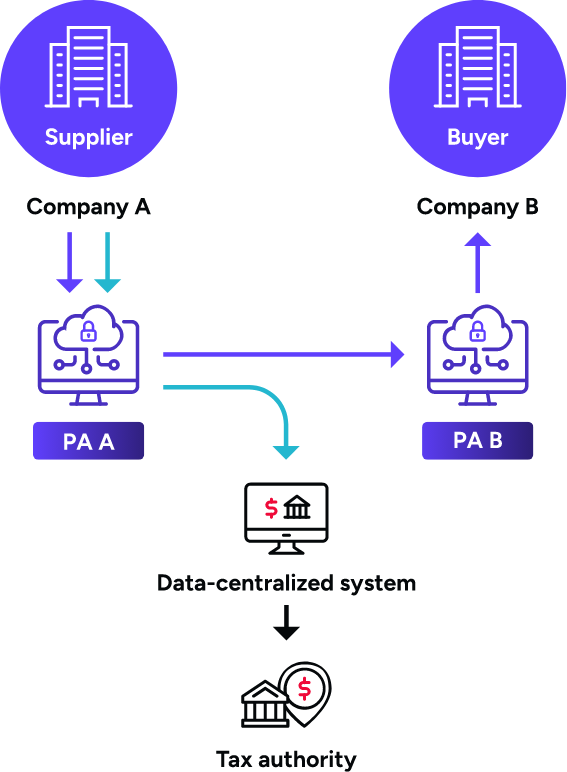
E-invoices must be transmitted through certified service providers (formerly PDPs*), which also handle transaction data reporting to the tax authorities (DGFiP) via the public invoicing platform (PPF).
*PA: Plateforme Agréée and PDP: Plateforme de Dématérialisation Partenaire, as referred to by the French Tax Authority
France e-invoicing timeline & key dates
After several timeline revisions, the French government confirmed a phased rollout for mandatory B2B e-invoicing. Taxpayers must now prepare for changes in invoice formats, the selection of a certified platform and overall compliance requirements.

September 2026
All businesses must be able to receive e‑invoices. Large and mid-sized companies (ETIs) must start issuing e‑invoices and comply with e-reporting requirements.

September 2027
SMEs and micro-enterprises must begin issuing electronic invoices and comply with e‑reporting obligations.
Implementation dates and requirements may evolve as regulations, technical specifications and administrative guidance continue to develop.
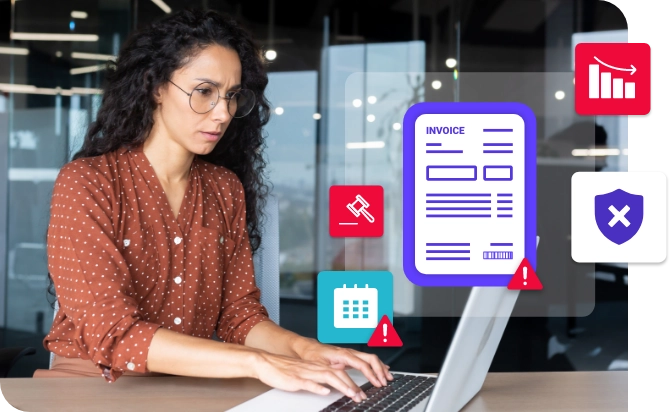
Non-compliance may lead to sanctions
France’s B2B e-invoicing reform includes administrative penalties for businesses that fail to comply with current and future mandates. Potential compliance risks include:
- Failure to issue compliant e-invoices
- Missing reporting or submission obligations
- Use of non-compliant e-invoicing platforms
- Insufficient invoice traceability or archiving procedures
EBOOK
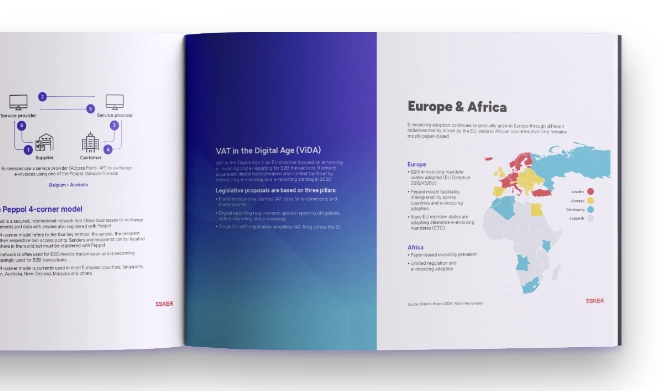
Get the guide to e‑invoicing readiness in France
Explore France’s model architecture, key compliance requirements, and the capabilities businesses need to build to build a scalable platform strategy.
What France’s e-invoicing reform changes for businesses
France’s reform changes how invoice data is exchanged, routed, and reported. Businesses need the right operational setup and compliance model to prepare effectively and support a smoother rollout.

Anticipate operational changes
France’s mandate affects how teams manage invoice data, workflows, and trading partner interactions. Early preparation can help reduce disruption once the reform takes full effect.
- Review invoice content, data and required fields
- Align ERP and invoicing workflows
- Coordinate customer and supplier invoicing processes
- Meet invoice traceability and archiving requirements

Choose the right compliance approach
France’s model introduces specific requirements around platforms, structured formats, and the exchange model. Businesses need an approach that supports the local regulatory framework while remaining scalable over time.
- Support local invoice formats
- Connect to the right platform environment
- Manage interoperability and invoice exchange requirements
- Scale with future regulatory changes
Why choose Esker for e-invoicing in France
Choosing the right e-invoicing solution in France is about more than meeting regulatory requirements. Businesses need a platform that supports local compliance while improving visibility, control, and efficiency across invoice operations.
Built for customer and supplier invoice workflows
Esker supports both customer invoice issuance and supplier invoice processing within a single integrated platform.
Designed for compliance and interoperability
Esker helps businesses manage structured invoice formats, platform environments, interoperability requirements, and evolving French e-invoicing obligations through one scalable platform.
Enable broader finance transformation initiatives
Esker extends e-invoicing readiness into wider accounts payable, accounts receivable, source-to-pay and order-to-cash transformation projects across the business.
Prepare for future EU regulatory changes (ViDA)
Esker helps businesses prepare for upcoming initiatives such as VAT in the Digital Age (ViDA) and adapt more easily to harmonised EU e-invoicing requirements.
Send us a message
Please fill in the form below to get in touch with us.
Anticipate the reform today
Automate invoice operations. Stay compliant from day one.
Deploy Esker Accounts Payable and Esker Invoice Delivery solutions to streamline invoice operations, improve visibility, and ensure compliance with current and future requirements.
Key benefits:

Improve supplier and customer invoice processes

Strengthen invoice data quality and workflow foundations

Prepare for platform and interoperability requirements

Activate French compliance capabilities



Frequently asked questions
Is e-invoicing mandatory in France?
Yes. E-invoicing in France is mandatory for domestic B2B transactions. All businesses must be able to receive electronic invoices from September 1, 2026. Issuance is phased: September 2026 for large and mid-sized companies and September 2027 for SMEs.
What is the French e-invoicing mandate for 2026?
The 2026 mandate requires all domestic B2B electronic invoices to be exchanged through certified service providers (formerly PDPs). It uses the Y-model architecture to report data to the government while facilitating business exchanges between trading parties.
What is e-reporting in France?
There are two components to the reform: e-invoicing and e-reporting. E-invoices and e-reporting data must be submitted directly to the tax authority through a third-party solution, which is a certified platform approved by the French Tax Authority. France’s General Directorate of Public Finance (DGFiP) refers to this approach as the “Y” model, which allows registered private platforms to transmit e-invoices to recipients at the same time that the invoice data is transmitted to the French tax authority.
The DGFiP selected this model because it offers more flexibility by allowing companies to choose the e-invoicing technology provider of their choice while also conforming to the new government regulations.
What is the difference between e-reporting and e-invoicing in France?
E-invoicing:
E-invoicing applies to domestic B2B transactions between companies subject to VAT. Invoices must be issued in a structured or hybrid format (structured + PDF). Platforms must be able to receive invoices in three mandatory formats: UBL, CII (structured formats) and Factur-X (hybrid format). The receipt of invoices in simple PDF format will no longer be accepted.
E-reporting:
E-Invoicing will not be mandatory for B2C and cross-border invoices. E-reporting is the obligation to transmit invoicing and payment data for transactions that are not subject to domestic B2B e-invoicing requirements. It applies to international B2B transactions, B2C transactions, intra-community acquisitions, services provided outside the EU and receipts where VAT is due. E-reporting obligations will follow the same calendar as e-invoicing.
What is the format for e-invoicing in France?
France requires EN 16931-compliant formats. The three main accepted structured format options are Factur-X (hybrid), UBL 2.1, and CEFACT CII (XML). Simple PDFs are not considered compliant.
What is the Directory in the French Mandate?
In the French e-invoicing mandate, the Directory is the central registry used to identify companies and route e-invoices to the right receiving platform.
What are the benefits of using a certified software for e-invoicing?
A certified platform (PA) transforms, validates and sends invoices to the French tax authority, as well as reports the invoicing data required for e-reporting to the French tax authority. Certified platforms are the only ones that can exchange invoices directly.
Acting as an intermediary between companies and the tax authorities, certified platforms play a key role in the digitisation of invoicing and accounting processes, including:
- Facilitating the transition to the e-invoicing reform
- Ensuring compliance
- Supporting businesses in the digitisation of invoice processing, both sending and receiving
- Transmitting invoices in one of the mandatory structured electronic formats
- Performing invoice controls, extracting required data, handling e-reporting,retrieving the status of transmissions, etc.
The digitisation of invoicing processes has significant benefits for businesses and governments. It reduces paperwork, eliminates errors and delays, and saves time and resources. It also improves compliance with tax regulations and enhances transparency and accountability. The role of certified platforms is critical in achieving this goal, as they provide a bridge between businesses and the tax authority.
Is e-invoicing mandatory for B2G in France?
For public contracts, all suppliers must submit their invoices electronically, through Chorus Pro. This requirement has applied to all public-sector suppliers since January 1, 2020, regardless of company size.
Is e-invoicing mandatory in the EU?
Several EU countries have already introduced mandatory e-invoicing requirements, including:
- Italy: Mandatory nationwide B2B e-invoicing has been in force since 2019 through the SDI platform.
- Poland: Mandatory e-invoicing through the KSeF platform was introduced in February 2026 for large
- Belgium: Mandatory B2B e-invoicing using Peppol was introduced in January 2026.
- Romania: Mandatory B2B e-invoicing through the RO e-Factura system has been applied since 2024.
Other EU countries, such as Spain and Germany, are also moving toward broader e-invoicing mandates.
France is currently implementing mandatory e-invoicing and e-reporting through a phased rollout planned for September 2026 and September 2027.