5 Essential Metrics to Master Accounts Receivable Performance
Discover the five most important metrics for managing Accounts Receivable and how tracking these KPIs can improve cash flow, reduce risk, and strengthen financial performance.

Managing Accounts Receivable (AR) effectively is one of the most critical aspects of maintaining healthy cash flow and ensuring long-term financial stability. While many organisations track dozens of indicators, focusing on the right metrics can make the difference between a reactive collections process and a proactive, strategic AR function. Below are the five metrics that matter most when it comes to measuring and improving AR performance.
1. Days Sales Outstanding (DSO)
DSO measures the average number of days it takes for a company to collect payment after a sale has been made. A high DSO indicates that cash is tied up in receivables for too long, which can strain liquidity. Monitoring DSO helps businesses identify whether their credit and collection policies are effective. For example, if your DSO is consistently above industry benchmarks, it may be time to revisit payment terms or strengthen follow-up procedures.
2. Collection Effectiveness Index (CEI)
While DSO shows how long it takes to collect, CEI measures how successful your team is at collecting receivables within a given period. It compares the amount collected against the total amount that was available to collect. A CEI close to 100% signals strong collection performance, while a lower score highlights inefficiencies. Unlike DSO, CEI accounts for both current and overdue receivables, making it a more comprehensive measure of collection effectiveness.
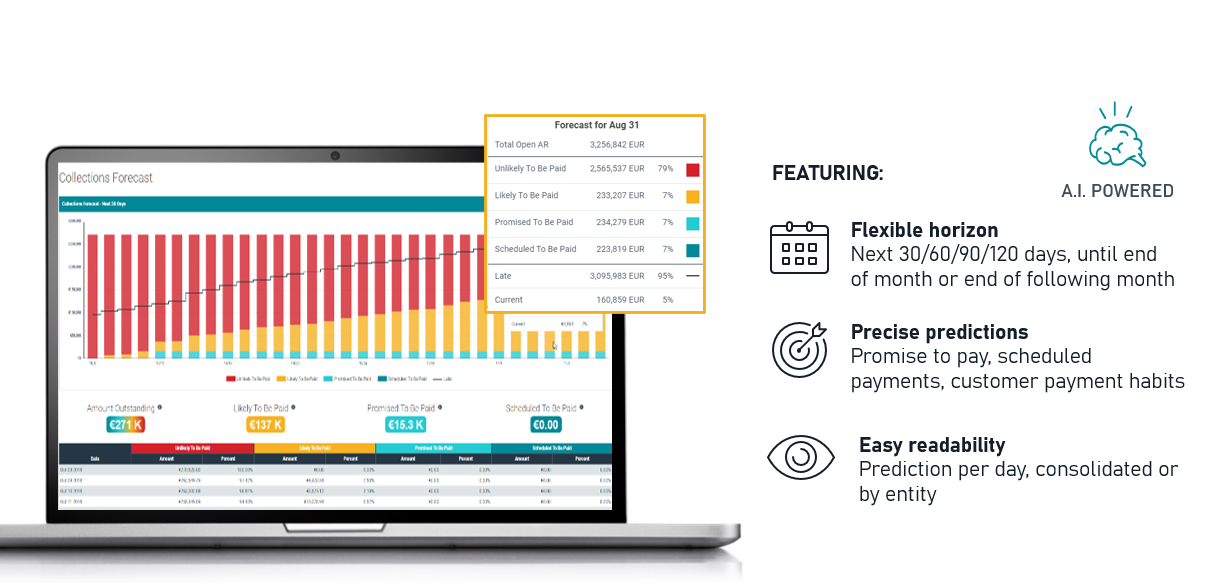
3. Collections Forecast
This estimates the amount of cash you can expect to receive in the next couple of days/weeks/months. It’s helpful, not only for you to adjust your collection efforts according to your organisation’s potential needs for cash, but to provide controllers and treasurers with accurate data for their cash forecast. Tracking this metric over time helps businesses spot trends in customer payment behaviour and can provide insights into how efficiently AR is being converted into cash.
4. Aging of Accounts Receivable
An AR aging report categorises outstanding invoices by the length of time they’ve been unpaid—typically 0–30 days, 31–60 days, 61–90 days, and over 90 days. This metric is crucial for identifying problem accounts before they become uncollectible. A healthy AR portfolio should have the majority of receivables in the current or 0–30 day bucket. If a significant portion is aging beyond 60 or 90 days, it’s a red flag that requires immediate action, such as tightening credit terms or escalating collection efforts.
5. Bad Debt Ratio
Not all receivables will be collected, and the bad debt ratio measures the percentage of receivables that are written off as uncollectable. A rising bad debt ratio can indicate poor onboarding or ineffective collection practices. Keeping this metric low is essential for profitability, as every penny lost to bad debt directly impacts the bottom line. Proactive credit checks, regular customer risk assessments, and early intervention strategies can help minimise bad debt exposure.
Let Esker ease the burden of manual KPI reporting
By focusing on these five key metrics businesses can gain a clear picture of their AR health and take targeted actions to improve performance. Strong AR management isn’t just about collecting faster; it’s about building sustainable processes that balance customer relationships with financial discipline.
The best indicators of process effectiveness and efficiency include those that are based on your organisation’s needs. Esker provides dashboards, built-in KPIs and customisable reporting capabilities to help you get the visibility you need to control (and share!) your AR performance as you wish. Out of the office? No worries, with Esker you can schedule your regular reports to be created and sent regardless! Need to report on bespoke metrics? We can help with that too! With Esker you have the ability to easily create and share additional metrics according to your specific needs.
In today’s competitive environment, mastering these metrics can provide a critical edge in maintaining liquidity and driving profitable growth. Get in touch for a free demo.
Claire Barker
As Marketing Specialist for Esker UK, Claire is responsible for generating leads for Esker's automation solutions specifically within the area of Accounts Receivable through a variety of marketing channels. She has been part of the Esker family since 2019.