

 English US
 English UK
 English AU
 English SG
 Français
 Deutsch
 Italiano
 Español
 Nederlands
E-Invoicing in Malaysia
Electronic invoicing is becoming a cornerstone of Malaysia’s digital economy. The new mandate aims to enhance tax compliance, reduce manual errors, and streamline business operations through a centralized e-invoicing system Malaysia.
*This page is intended as a practical overview only. Requirements, rules, timelines and technical specifications may change as the regulation evolves.



Malaysia e-invoicing requirements at a glance
From e-invoicing model selection to rollout timing, these are the key factors businesses should consider when preparing for Malaysia's mandatory e-invoicing obligations.
Current status — Live and mandatory
Scope — Domestic B2B, B2G and B2C transactions
The reform covers all domestic transactions.
Cross-border transactions must also be reported.
Format — Peppol MY-PINT, XML or JSON formats
Invoices must be issued in one of the following formats: Peppol MY-PINT, XML, or JSON.
Archiving — 7 years
The invoice archiving period is 7 years from the latest date of any related documents.
Transmission method — MyInvois or API
E-invoices are submitted to the MyInvois platform, either directly or through an integrated service provider or a certified Peppol Access Point.
Malaysia e-invoicing timeline & key dates
Malaysia is progressively introducing mandatory e-invoicing. Businesses should prepare for upcoming compliance milestones by aligning their invoicing processes with the new requirements.

August 2024
Taxpayers with an annual turnover or revenue exceeding RM100 million must issue e-invoices.

January 2025
Taxpayers with an annual turnover or revenue exceeding RM25 million and up to RM100 million must issue e-invoices.

July 2025
Taxpayers with an annual turnover or revenue exceeding RM5 million and up to RM25 million must issue e-invoices.
January 2026
Taxpayers with an annual turnover or revenue of up to RM5 million.
Implementation dates and requirements may evolve as regulations, technical specifications and administrative guidance continue to develop.
Sanctions & compliance risks
Non-compliance may lead to future sanctions
Malaysia’s B2B e-invoicing reform is expected to include administrative penalties for businesses that fail to comply once the mandate takes effect.
Potential compliance risks may include:
- Failure to issue compliant e-invoices
- Missing reporting or submission obligations
- Use of non-compliant e-invoicing platforms
- Insufficient invoice traceability or archiving procedures
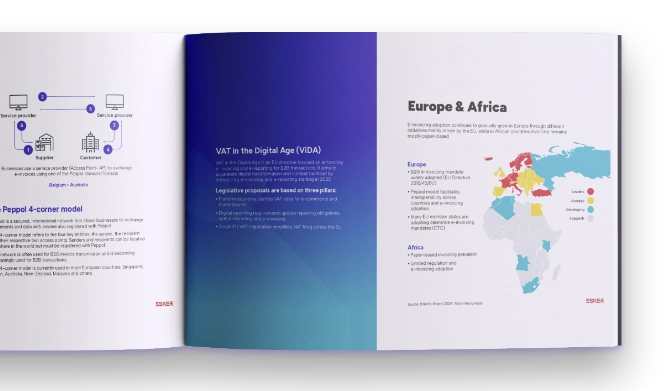
EBOOK
Get the guide to global e‑invoicing readiness
Explore the main global e-invoicing models, emerging compliance trends and the key capabilities businesses should look for in a scalable platform strategy.
What Malaysia’s e-invoicing reform changes for businesses
Malaysia’s reform changes how invoice data is exchanged, routed and reported. Businesses need the right operational setup and compliance model to prepare effectively and support a smoother rollout.
Anticipate operational changes
Malaysia’s mandate will affect how teams manage invoice data, workflows and trading partner interactions. Early preparation can help reduce disruption once the reform takes effect.
- Review invoice content, data and required fields
- Align ERP and invoicing workflows
- Coordinate customer and supplier invoicing processes
- Ensure invoice traceability and archiving need

Choose the right compliance approach
Malaysia’s model introduces specific requirements around platforms, structured formats, and the exchange model. Businesses need an approach that supports the local regulatory framework while remaining scalable over time.
- Support local invoice formats
- Connect to the right platform environment
- Manage interoperability and invoice exchange requirements
- Scale with future regulatory changes
Why Esker for e-invoicing in Malaysia
Choosing the right e-invoicing solution in Malaysia is about more than meeting regulatory requirements. Businesses need a platform that supports local compliance while improving visibility, control and efficiency across invoice operations.Built for customer and supplier invoice workflows
Peppol Interoperability
Esker is a Peppol Access Point, aligned with the National e-invoice initiative.
Built for customer and supplier invoice workflows
Esker supports both customer invoice issuance and supplier invoice processing within a single integrated platform.
Designed for compliance and interoperability
Esker helps businesses manage structured invoice formats, platform environments, interoperability requirements and evolving Malaysia e-invoicing obligations through one scalable platform.
Enable broader finance transformation initiatives
Esker extends e-invoicing readiness into wider accounts payable, accounts receivable, source-to-pay and order-to-cash transformation projects across the business.
Send us a message
Please fill in the form below to get in touch with us.
Automate invoice operations. Stay compliant from day one.
Deploy Esker Accounts Payable and Esker Invoice Delivery to streamline invoice operations, improve visibility, and ensure compliance with current and future requirements.
Key benefits:

Improve supplier and customer invoice processes today

Strengthen invoice data quality and workflow foundations

Prepare for future platform and interoperability requirements

Activate compliance capabilities



Frequently asked questions
What is e-invoicing in Malaysia?
It is the digital exchange of invoices validated in real-time by the Inland Revenue Board of Malaysia (LHDN).
IRBM is taking a proactive approach to e-invoicing by creating a centralised platform where all e-invoices must be submitted for validation and registration. This goal of the platform is to ensure the accuracy and compliance of invoices, making the taxation process more transparent and efficient.
What are the rules for e-invoicing in Malaysia?
Businesses must follow e-invoice guidelines Malaysia regarding structured formats (XML/JSON), mandatory data fields, and real-time validation via the MyInvois platform.
How to submit invoices in Malaysia ?
There are two methods available for transmitting invoices to the IRBM portal:
- Manually via the MyInvois portal: Businesses can manually submit their invoices through the MyInvois portal provided by the IRBM.
- Automatically via API in XML or JSON format: Businesses can opt to submit invoices automatically via API in either XML or JSON format for a more streamlined process. This approach provides efficiency and reduces manual intervention.
Once an invoice is submitted, IRBM will assign a unique identifier and QR code to each document as part of its validation framework. Both the sender and the recipient will receive notifications from IRBM upon successful validation. Subsequently, the supplier must deliver the validated document to the buyer through their chosen channels.
Why is e-invoicing being implemented in Malaysia?
To increase tax transparency, reduce fraud, and support the government's digital transformation goals for businesses.
Who is exempted from the mandate?
Exempted Persons Businesses with an annual turnover of less than RM 1 million are currently exempted from the mandate.
What is PEPPOL E-Invoicing in Malaysia?
Esker supports businesses in Malaysia to align with LHDN's e-invoicing requirements through the PEPPOL network. With our solution, you can efficiently send and receive invoices, ensuring readiness for compliance with Malaysia's evolving e-invoicing framework.
For detailed information about the PEPPOL network, visit the MDEC PEPPOL page here